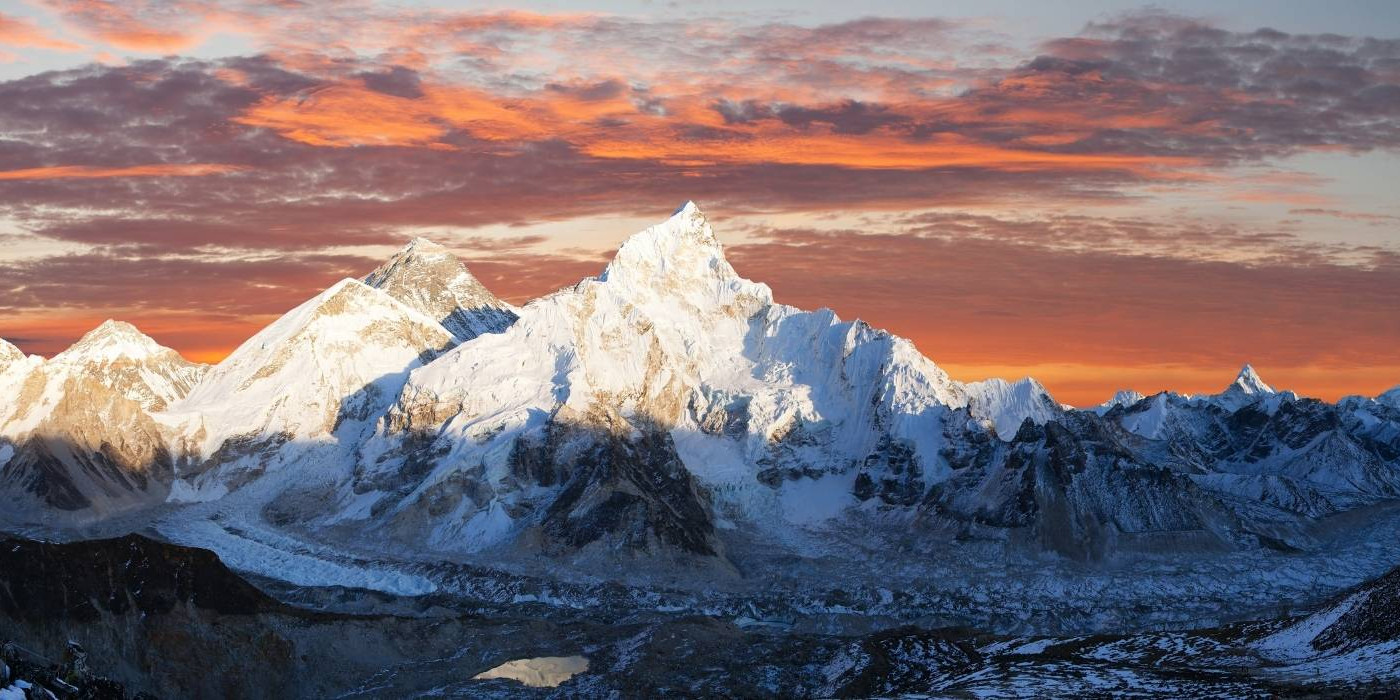
Beyond the Frame: The Philosophy of the Wide View
For as long as humans have sought to document their existence, we have been limited by the boundaries of the frame. Whether it was the edge of a canvas or the rectangular confines of a viewfinder, our visual history has largely been told through fragments. We capture a face, a tree, or a specific architectural detail, but the context—the sweeping grandeur of the world that surrounds those subjects—often remains relegated to the periphery of our memory. However, the advent of automated stitching and AI-driven imagery is fundamentally altering this dynamic. We are no longer merely looking through a window; we are dismantling the walls entirely.
Mastering the art of seamless photo stitching enables creators to transcend traditional boundaries and capture the true atmospheric essence of their surroundings.
Automated stitching represents more than just a technical convenience. It is a shift in our digital ontology. When we use tools like those found on AutoStitch to merge multiple perspectives into a singular, cohesive vista, we are participating in a form of visual alchemy. We are taking the discrete, disparate moments of our perception and weaving them into a continuous tapestry that more closely mirrors the expansive way we actually experience reality.
The Alchemy of Algorithms: How Automation Bridges the Gaps
In the early days of digital photography, creating a panorama was a labor-intensive task that required a surgeon’s precision and a mathematician’s patience. One had to worry about parallax errors, exposure inconsistencies, and the visible seams that betrayed the illusion of wholeness. Today, the algorithm has stepped in as the silent mediator. Automated stitching technology analyzes the overlapping patterns of light and shadow, identifying commonalities between frames that the human eye might miss.
The Seamless Transition
There is something profoundly meditative about the way modern AI handles the ‘stitch.’ It is an act of reconciliation. It takes the sharp edges of individual photos and softens them, blending them until the boundary between ‘here’ and ‘there’ vanishes. This invisibility of technology is where the magic lies. When the tool works perfectly, we forget the tool exists. We are left only with the experience of the space itself—a digital environment that feels breathable, navigable, and boundless.
This reshaping of digital space allows us to perceive our environment not as a series of snapshots, but as a continuum. In this new landscape, the digital space becomes an extension of our own physical presence. We can look up, down, and around, finding a sense of scale that was previously lost in the crop of a standard lens.
Redefining Our Place in the Landscape
How does this change us? When our perception of space expands, our relationship to that space changes. A narrow photo of a mountain peak is a trophy; a 360-degree stitched panorama of the entire range is an immersion. The former says, ‘I saw this,’ while the latter says, ‘I was here.’
Automated stitching technology has democratized the ‘grand vista,’ making it possible for anyone with a vision to capture the magnitude of their surroundings. This shift has several profound implications for how we interact with digital media:
- The Dissolution of Borders: We are moving away from the ‘boxed-in’ feel of traditional social media feeds toward more immersive, expansive layouts that prioritize the horizon.
- The Preservation of Atmospheric Memory: By capturing the periphery, we preserve the mood and atmosphere of a location, not just the central subject.
- Contextual Storytelling: Automated stitching allows photographers to show the relationship between different elements in a scene, providing a narrative depth that single frames lack.
- Accessibility of Grandeur: What once required expensive wide-angle glass can now be achieved through intelligent software, allowing for a more inclusive exploration of high-end aesthetics.
The Future of the Digital Horizon
As we look toward the future of digital space, the role of automated stitching will only grow more significant. We are moving toward a world where the ‘photo’ is no longer a static object, but a gateway. With the integration of AI, these stitched images are becoming the foundation for virtual realities and augmented experiences. We are building a digital twin of our world, one seamless stitch at a time.
This evolution forces us to reflect on the nature of truth in photography. If a photo is stitched together by an algorithm, is it less ‘real’ than a single exposure? Or is it perhaps more ‘true’ to the human experience? Our eyes do not see in rectangles; they scan, they linger, and they piece together a world from a million tiny glances. In many ways, automated stitching is the most honest representation of human vision we have ever created.
A New Way of Seeing
Ultimately, the expansive lens offered by AutoStitch and similar technologies invites us to be more present. It encourages us to look wider, to appreciate the context of our lives, and to recognize that every small detail is part of a much larger, more beautiful whole. As we continue to reshape our digital space, we are not just changing how we take pictures; we are changing how we see the world and our place within its vast, unfolding story.
In the silence between the frames, where the algorithm works its quiet wonders, we find a new kind of clarity. The digital space is no longer a constraint—it is an invitation to explore the infinite.
Related Posts
How a wider view actually helps us find the right home
Discover how a panoramic perspective…
How Wide Perspectives Help Us Find Our Place in the World
Discover why wide-angle photography and…