
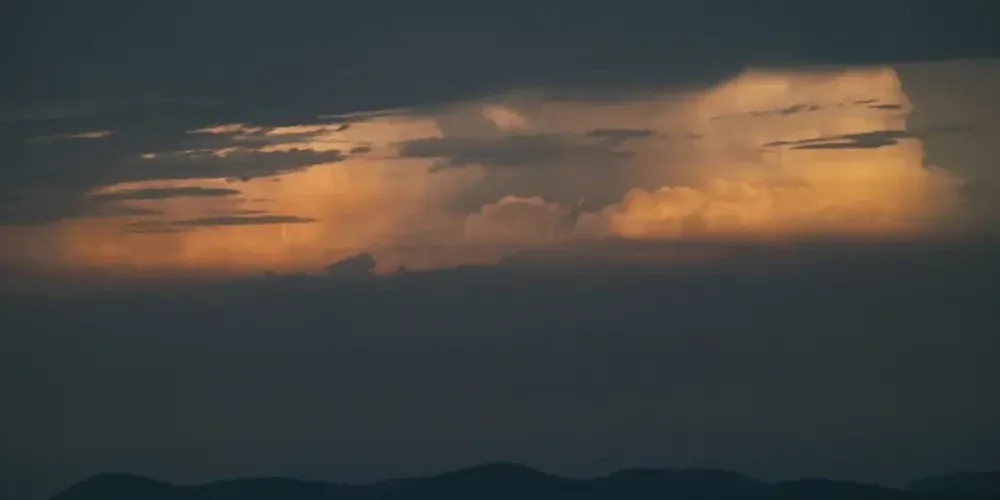
The Philosophy of the Wide-Angle View
There is a specific kind of quiet that arrives when we stand before a vast horizon. Whether it is the jagged silhouette of a mountain range at dusk or the sprawling neon pulse of a midnight cityscape, our first instinct is often to reach for a camera. Yet, the traditional rectangular frame of a standard photograph often feels like a whisper when the moment demands a shout. It captures a fragment, a slice of reality, but it frequently fails to hold the weight of the atmosphere. To truly honor the scale of our experiences, we must learn to widen our gaze.
Panoramic perspective is more than just a technical format; it is a reflective practice. It invites us to move beyond the limitations of ‘tunnel vision’ and embrace the totality of a scene. When we use tools like AutoStitch to merge multiple images into a singular, seamless narrative, we aren't just creating a larger file—we are attempting to replicate the immersive way the human soul perceives the world. We don't just see what is in front of us; we feel the space that surrounds us.
The Limitation of the Single Frame
Most of our digital lives are lived in crops. We view the world through the vertical orientation of a smartphone or the fixed ratio of a social media post. While these formats are excellent for portraits and singular subjects, they often strip away the context that gives a moment its meaning. A photo of a single wave is beautiful, but a panorama of the entire coastline tells a story of power, rhythm, and infinite distance.
Why We Seek the Horizon
Psychologically, humans are wired to find peace in expansive views. Historically, a clear view of the horizon signified safety and possibility. In a modern context, widening our visual field serves as an antidote to the claustrophobia of daily routines. When we look at a panoramic image, our eyes are allowed to wander. We are not told exactly where to look; instead, we are invited to explore the frame, discovering small details in the corners that would have been lost in a tighter shot.
Stitching Memories: The Art of Connection
The process of photo stitching is a metaphor for how we construct memories. Our brains do not store a single, high-resolution snapshot of an event. Instead, they gather fragments—the way the light hit the water, the expression on a friend's face, the vastness of the sky—and stitch them together into a cohesive feeling. Using AI-driven technology to create panoramas mimics this biological process. It takes disparate pieces of data and finds the common threads, the overlapping edges, and the shared light to create a whole that is greater than the sum of its parts.
In this reflective act of creation, we find that the scale of a moment is often found in the transitions. It is in the way the forest gives way to the meadow, or how the shadows of a canyon wall blend into the sun-drenched valley floor. These transitions are where the story lives.
The Benefits of a Wider Narrative
- Immersion: Panoramas wrap around the viewer’s field of vision, making them feel as though they are standing back in that specific moment.
- Context: By showing the environment surrounding a subject, you provide a deeper understanding of the 'where' and the 'why.'
- Narrative Flow: A wide-angle view allows for a left-to-right progression that can mimic the passage of time or the movement of a journey.
- Scale: Without the full perspective, grand landmarks lose their majesty; panoramas restore the true proportions of nature and architecture.
Technology as a Bridge to Presence
We often think of technology as something that distracts us from the present moment. However, when used intentionally, AI photo stitching tools can actually deepen our presence. The act of capturing a panorama requires us to scan our environment slowly, to notice the periphery, and to acknowledge the full scope of our surroundings. It forces a pause.
Modern AutoStitch technology removes the technical friction that once made panoramic photography a chore. By handling the complex mathematics of alignment and blending, it allows the creator to focus on the emotional resonance of the image. We are no longer worried about the seams; we are focused on the story. This seamlessness is vital because any glitch in the image acts as a reminder of the medium, breaking the spell of the moment. When the stitching is perfect, the technology disappears, leaving only the experience behind.
Conclusion: Seeing the Full Scale of Life
Widening our gaze is a choice to see more. It is an acknowledgment that the world is too big, too beautiful, and too complex to be contained within a narrow box. Whether you are a professional photographer or someone simply trying to hold onto the feeling of a summer sunset, embracing the panoramic perspective allows you to honor the full scale of your life.
As we continue to navigate a world that often feels fragmented, the ability to create a unified, expansive visual story is a powerful gift. It reminds us that everything is connected—the sky to the earth, the past to the present, and one frame to the next. Through the lens of a panorama, we don't just see the view; we experience the magnitude of being alive within it.